
A confident smile can change how you look, feel, and interact with the world around you. But if you’re self-conscious about crooked teeth, gaps, or bite issues, you may be considering orthodontic treatment. Today, two of the most effective solutions are traditional braces and Invisalign clear aligners.
Both options can create stunning, long-lasting results. However, choosing the right one depends on your lifestyle, budget, and orthodontic needs. In this article, we’ll explore the key differences between braces and Invisalign, their advantages and drawbacks, and how to decide which is the best path for your smile.
Why Consider Orthodontic Treatment?
Before comparing treatment types, it’s important to understand why straightening your teeth is more than just a cosmetic choice. Orthodontics improves not only the appearance of your smile but also your overall oral health.
- Improved Bite Function – Properly aligned teeth help with chewing, speaking, and jaw function.
- Easier Oral Hygiene – Straighter teeth reduce the risk of cavities, gum disease, and plaque buildup.
- Prevention of Long-Term Issues – Orthodontic treatment can help prevent uneven tooth wear, jaw pain, and even TMJ disorders.
- Confidence Boost – A straight, confident smile can impact self-esteem in both personal and professional settings.
Now let’s look at how braces and Invisalign help you achieve these benefits.
Braces: The Traditional, Time-Tested Option
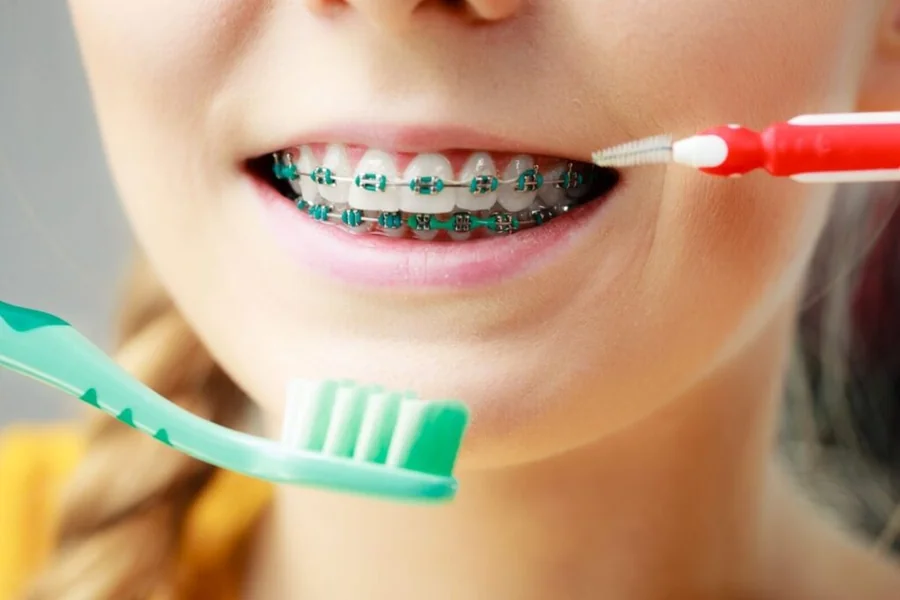
Braces have been the cornerstone of orthodontics for decades. They consist of metal or ceramic brackets bonded to the teeth, connected by wires and elastics that guide teeth into proper alignment over time.
Benefits of Braces
- Comprehensive Treatment Power
Braces are highly effective for treating complex cases, such as severe overcrowding, rotated teeth, overbites, underbites, and crossbites. - Always Working
Because braces are fixed to your teeth, they’re always doing their job. You don’t need to worry about forgetting to wear them, which makes them especially effective for younger patients or those who may not be disciplined with removable aligners. - Precise Adjustments
Orthodontists have complete control over tooth movement, with the ability to make micro-adjustments during regular visits. - Durability
Braces are sturdy and reliable, meaning they can withstand more pressure than clear aligners.
Things to Consider
- Visibility: Traditional braces are more noticeable than Invisalign, though ceramic (clear) braces offer a subtler option.
- Oral Hygiene: Brushing and flossing around brackets can be challenging, requiring special tools like floss threaders.
- Dietary Restrictions: Sticky, hard, and chewy foods should be avoided to prevent damage.
- Discomfort: Some patients experience irritation from wires and brackets, though adjustments usually help over time.
Braces typically stay on for 18–36 months, depending on the complexity of the case.
Invisalign: The Clear Aligner Revolution
Invisalign has transformed orthodontics by offering a discreet alternative to braces. This system uses a series of custom-made clear aligners that gradually shift teeth into place.
Benefits of Invisalign
- Discreet Appearance
Invisalign aligners are virtually invisible, making them a popular choice among adults and image-conscious teens. - Removability
Aligners can be taken out while eating, drinking, brushing, or flossing. That means no food restrictions and easier oral hygiene. - Comfort
The aligners are made from smooth plastic, reducing the risk of irritation compared to metal brackets. - Predictable Progress
Invisalign treatment is digitally planned in advance, so patients can often see a 3D preview of their expected results before starting.
Things to Consider
- Discipline Required: Aligners must be worn 20–22 hours per day. Forgetting to wear them can delay results.
- Not for Every Case: Invisalign works best for mild to moderate alignment issues; severe cases may still require braces.
- Cost: In some cases, Invisalign may be slightly more expensive than braces, depending on treatment needs.
- Regular Changes: Aligners need to be swapped every 1–2 weeks and kept clean to avoid staining or odor.
Most Invisalign treatments take 12–24 months, though simpler cases can be completed faster.
Braces vs. Invisalign: A Side-by-Side Comparison
| Feature | Braces | Invisalign |
| Visibility | Highly noticeable (unless ceramic) | Nearly invisible |
| Treatment Range | Works for all cases, including severe | Best for mild to moderate |
| Discipline Needed | None (fixed appliance) | High (20–22 hrs/day wear) |
| Oral Hygiene | More difficult (brackets/wires) | Easier (removable) |
| Diet Restrictions | Yes | None |
| Comfort | May cause irritation | Smooth, more comfortable |
| Duration | 18–36 months | 12–24 months (average) |
Which Option Fits Your Lifestyle?
The decision often comes down to more than just effectiveness—it’s also about your personality and daily habits.
- For Teens and Adults Wanting Discretion → Invisalign is often the top choice because of its near invisibility.
- For Younger Patients or Complex Cases → Braces may be recommended for their reliability and ability to handle complex issues.
- For Busy Professionals → Invisalign’s removability can be a plus, but it requires strict discipline.
- For Budget-Conscious Families → Traditional braces may sometimes be the more affordable option, depending on insurance coverage.
Consulting an Expert Is Key
While online comparisons are helpful, the best way to decide between braces and Invisalign is to meet with an experienced orthodontist. A personalized evaluation will consider:
- Your dental health and bite alignment.
- The complexity of your case.
- Your lifestyle, preferences, and budget.
- The timeline for your desired results.
At Kumra Orthodontics, our team takes the time to understand your goals and provide a tailored treatment plan. Whether you choose braces or Invisalign, you’ll have the support of skilled specialists guiding you every step of the way.
Final Thoughts
Both braces and Invisalign are excellent tools for creating a healthy, confident smile. The best choice ultimately depends on your unique needs and priorities.
If you’re ready to take the first step toward your dream smile, schedule a consultation with an experienced orthodontist in Stafford, VA. Together, you can determine whether braces or Invisalign is the right choice for your future smile.